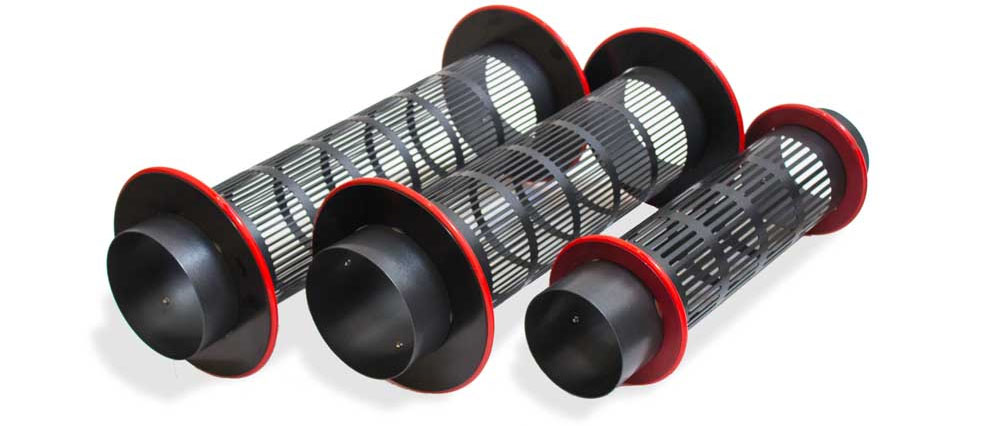

All CenturionPro Trimming Machines Now Come All Inclusive with BOTH WET and DRY tumblers!!!
Or… Do you only trim one way? Get all your tumblers as either WET or DRY!
WHY NOT USE A DUAL-PURPOSE STANDARD TUMBLER TO TRIM BOTH WET AND DRY FLOWERS?
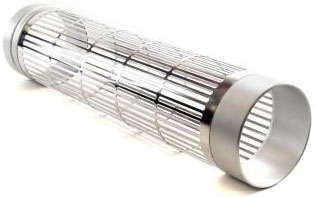
Yes, a “dual-purpose standard tumbler” will harvest both wet and dry flower.
But.....You will not receive the same level of efficiency as using a tumbler designed specifically for a particular wet or dry trimming application.
The dual-purpose standard tumbler will not trim as fast or as clean as a dedicated wet tumbler and will not be as delicate on your flowers as a true dedicated dry tumbler.
This is why we will not promote "dual-purpose standard" tumblers and this is also why CenturionPro includes both a wet and a dry tumbler with each machine.
CENTURIONPRO REGULAR WET TUMBLER
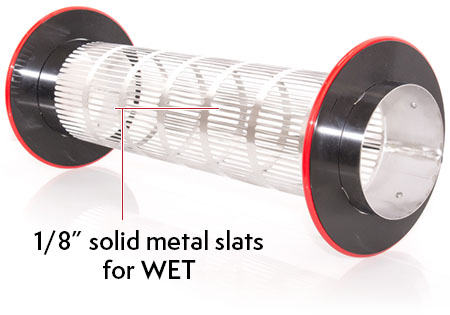
The solid steel slats on our wet tumblers are 1/8” in width compared to 1/4” on tumblers offered by our competitors. Having a thinner slat means less metal material and more open area, resulting in an overall increase in access to the blades by 50% when compared to the 1/4” wide standard dual-purpose tumbler.
This increased cutting surface allows more of the flower to come in contact with the blades resulting in a tighter, closer, faster cut with just one pass. This negates the need for a second pass through a tumbler or placing machines “back-to-back”. Less tumbler travel time means less agitation and better quality results!!
Another advantage to 1/8” wide slats is that the thinner slats have a smaller surface area for resin to build up on, therefore reducing resin loss and quickening tumbler clean up time.
What does this mean??? You will have a higher potency product and less cleaning time when using our dedicated wet tumbler.
CENTURIONPRO NARROW DRY TUMBLER
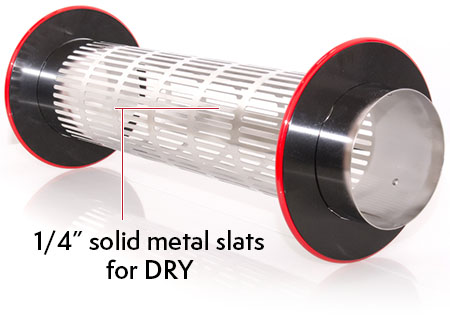
When fresh wet flowers are fully dried, they shrink to about 25%-30% in size of what they once were. They become brittle, fragile and more susceptible to damage.
For this reason, a Dry tumbler is needed when harvesting dry flowers because the cutting surface area is greatly reduced on the dry tumbler. The 1/4” wide steel slats means more metal material is present and there is less open area, thereby protecting the smaller fragile flowers from being overexposed to the blades of the machine. This will result in less trichome loss and a higher yield as more of your flowers will stay intact during the harvesting process.
You will not get this level of protection when using a "dual-purpose standard tumbler" to trim both wet and dry flowers.