
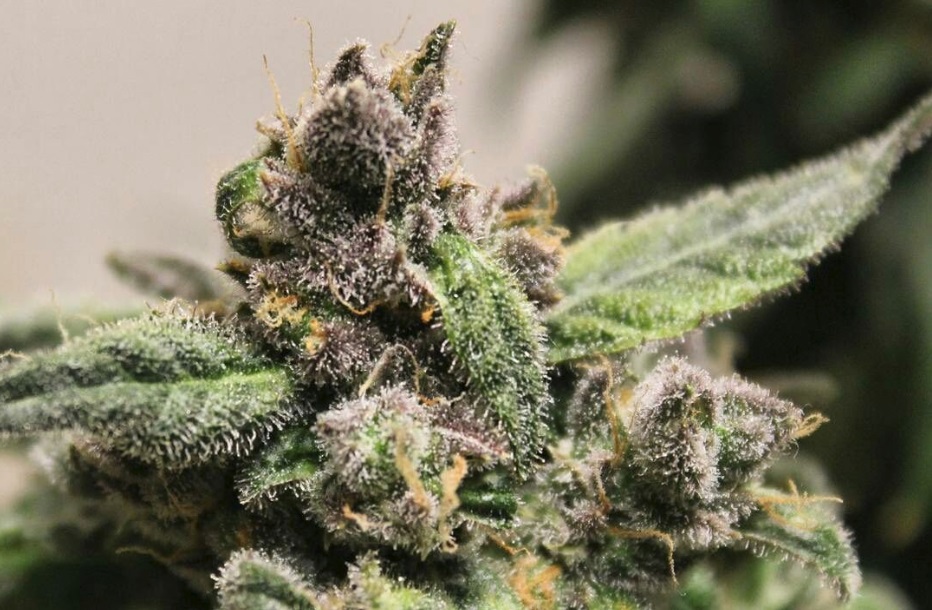
Understanding the various stages of trichome development is vital for cannabis growers who are searching for particular effects, as it can help to determine the best time to harvest the plant. While not all growers take trichome development seriously (or have the patience to wait a few extra days for peak THC levels), it is an important aspect of the harvest that should not be overlooked.
If you are a grower looking for insight on when to harvest particular strains, trichomes are an excellent indicator! All that is needed is knowledge of approximately how many weeks until the plant reaches near-harvest. Then, armed with this information, a HD digital camera or handheld microscope will be great tools to check trichome development.
Stages of Trichome Development
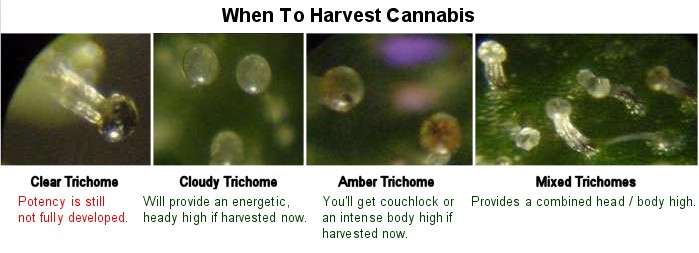
There are essentially four stages of trichome development, as shown above: Clear, Cloudy, Amber and Mixed. Each of these stages have various consequences on the strain effects, and can be great indicators of when to harvest.
Clear Trichomes
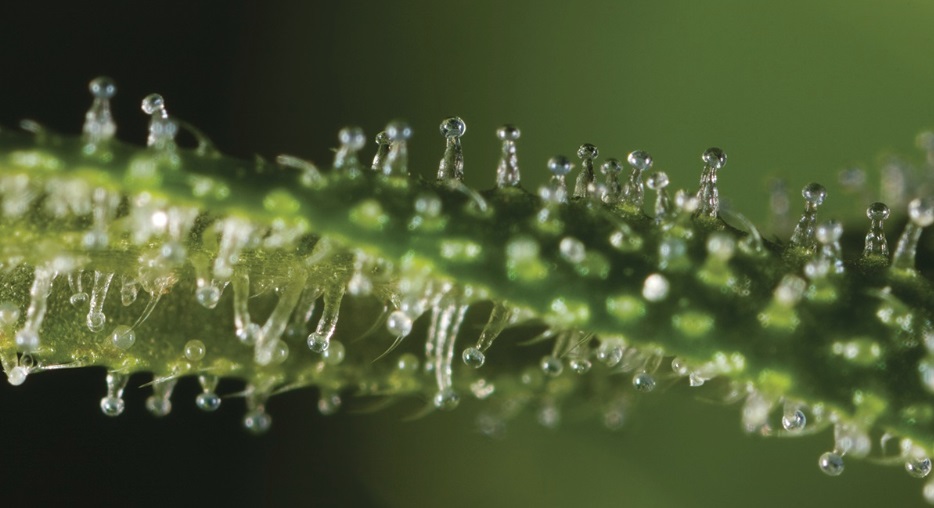
Trichomes that indicate plants that are nearing their peak concentration levels. They are translucent as the plant is still producing resin within the glands and slowly filling them. At this stage, the trichomes do not have enough potency so harvesting now can have negative consequences on yield.
Cloudy Trichomes
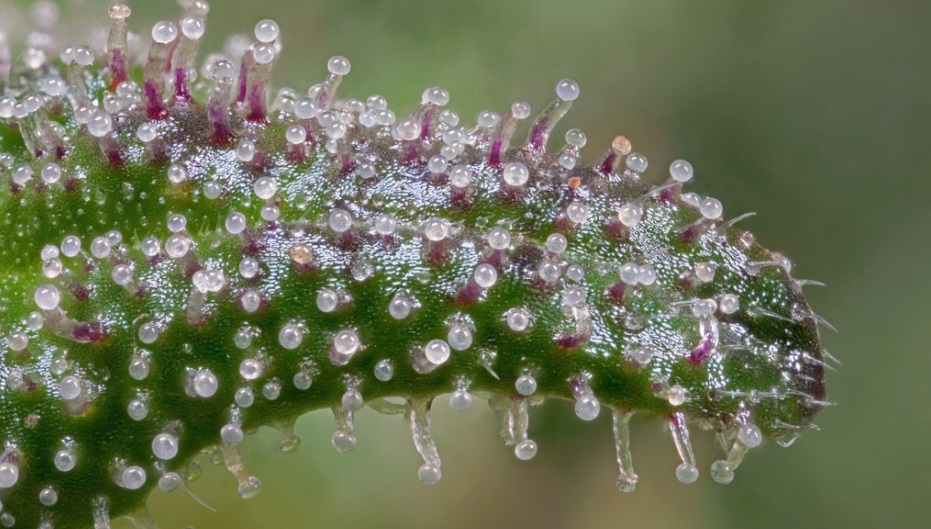
Cloudy trichomes occur prior to harvest and indicates that cannabinoid levels have reach their maximum. This does not necessarily mean that it is an extremely potent strain with THC levels to knock-your-socks-off, as that is dependant on other factors as well. However, it is a good indicator of when the strain has reached its production peak.
A good rule of thumb is to harvest Sativa crops when half the trichomes are cloudy. In most cases, this results in the highest level of THC (for that particular plant) as well as the lowest levels of CBD. In addition, this will result in the most uplifting and energizing effects to give a true Sativa feel for the consumer.
Amber Trichomes
Amber trichomes are great indicators for Indica growers as they tend to produce the heaviest and most physical effects – often resulting in couchlock.
Bear in mind that trichomes turning amber do indicate deteriorating THC levels, so it is a good idea to check on them several times a day to ensure that you harvest at the peak moment for both high THC levels as well as the desired couchlock effects.
Mixed Trichomes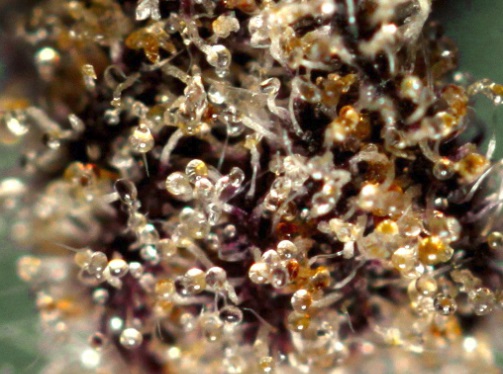
Hybrids are somewhat different than Sativa or Indica strains as they tend to have a combination of effects ranging from 50/50 to 60/40, 70/30, 80/20 and even 90/10 splits of Indica versus Sativa components (cerebral vs. physical).
The perfect time to harvest Sativa-dominant hybrid strains are when 70% of the trichomes are cloudy with the remainder are beginning to turn to amber. The cloudy trichomes produce more uplifting and stimulating clear-headed cerebral effects while amber trichomes tend to result in heavier, more intense effects.
If you are growing Indica-dominant strains, it is ideal to wait until at least 60% of the trichomes have turned amber. In this case, the effects will lean heavier to couchlock and physical relaxation as opposed to the uplifting, stimulating effects from milky trichomes.
There is also the option of harvesting at a 50/50 split of trichomes, with half being cloudy and half being amber. The result of this mixture will be a near-even split of cerebral and physical effects.
Final Thoughts
Overall, watching trichome development is a great way to somewhat manipulate your cannabis strains to produce the desired THC levels and effects. Of course, plant genetics, environment, nutrition, lighting and cannabinoid and terpene levels will also influence the strain effects.
Are You Harvest Ready?
CenturionPro Solutions fulfills harvest needs for cannabis growers around the world looking to improve the efficiency of harvest time. The elite trimmer line-up offered by CenturionPro ensures that everyone from the home grower to large-scale Licensed Producers can access a machine that is suitable from there needs. With capacity to trim from 6lbs dry (30lbs wet) with the Tabletop Pro all the way up to 50bs dry (250lbs wet) with the 3.0 medical grade system, CenturionPro offers impressive options for growers. Click here to learn more!