
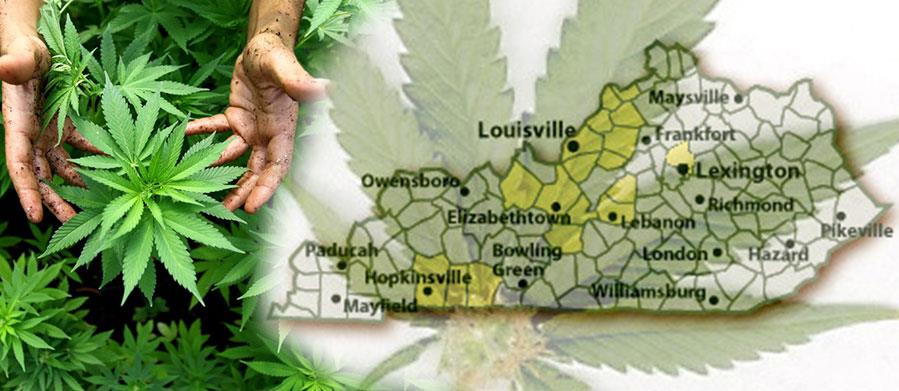
Anyone want to grow hemp? The state of Kentucky might be your solid bet – especially because it’s among the nation’s largest hemp crops, one that is expanding.

The state’s Department of Agriculture is now accepting applications from anyone interested in participating in the 2017 hemp-growing pilot program, which will likely result in thousands of acres being planted, if 2016 is any gauge.
This past year, the state authorized up to 4,500 acres of industrial hemp to be grown, but only about 2,350 were actually planted. Although that number may sound small, the program began with just 33 acres in 2014.
While 29 states permit hemp cultivation, most of today’s domestic crop comes from Colorado and Kentucky. Kentucky does not have a medical marijuana law, but in 2014 the governor signed a law making it legal for epilepsy patients to use CBD oil with a doctor’s recommendation. The CBD oil – which is derived from hemp – cannot be transported out of state.
Hopeful hemp growers need to get applications to the Kentucky Department of Agriculture by Nov. 2016, and an outline of requirements can be found on the agency’s website.
The application fee costs only $50, and applicants can’t have any drug-related misdemeanors or felony convictions from the last decade. There’s a background check, and GPS coordinates of any proposed grow site must be included in the application. For all those cannabis, and best bud trimmers, Cannabis trimming machine operators, time to ship them machines that trim wet or dry to Kentucky! Looks like there on to something big!
Michael Garay ~

GMP refers to the Good Manufacturing Practice Regulations promulgated by the US Food and Drug Administration under the authority of the Federal Food, Drug, and Cosmetic Act (See Chapter IV for food, and Chapter V, Subchapters A, B, C, D, and E for drugs and devices.) These regulations, which have the force of law, require that manufacturers, processors, and packagers of drugs, medical devices, some food, and blood take proactive steps to ensure that their products are safe, pure, and effective. GMP regulations require a quality approach to manufacturing, enabling companies to minimize or eliminate instances of contamination, mixups, and errors. This in turn, protects the consumer from purchasing a product which is not effective or even dangerous. Failure of firms to comply with GMP regulations can result in very serious consequences including recall, seizure, fines, and jail time.

GMP regulations address issues including record keeping, personnel qualifications, sanitation, cleanliness, equipment verification, process validation, and complaint handling. Most GMP requirements are very general and open-ended, allowing each manufacturer to decide individually how to best implement the necessary controls. This provides much flexibility, but also requires that the manufacturer interpret the requirements in a manner which makes sense for each individual business.

GMP is also sometimes referred to as “cGMP”. The “c” stands for “current,” reminding manufacturers that they must employ technologies and systems which are up-to-date in order to comply with the regulation.