

Pests can wreak havoc on cannabis plants when not kept in check, causing deterioration of the plant – even death – and can spread quite quickly throughout a large garden. Fortunately, there are some proactive measures that can be taken in order to prevent pests in your indoor cannabis garden.
Secure Your Grow Space
Ensuring your grow space is well-sealed is the number one way to prevent pests, which may contaminant or even kill your cannabis plants. A well-built grow room acts as a barrier between your precious plants and the outside world. That is why it is important to ensure that your grow room is well sealed, and also that it is easy to clean – should any issues arise.
If you’re building your own room, mylar is an excellent option as it is easy to clean. Grow tents are another popular option and are available in various dimensions to suit your needs.
Sanitize Your Garden
A well-sealed grow room will be fairly safe from pests – apart from whatever you bring inside. This is why it can be a good idea to keep yourself, your clothing and the equipment sterilized as pests can often make their way indoors on shoes or jackets.
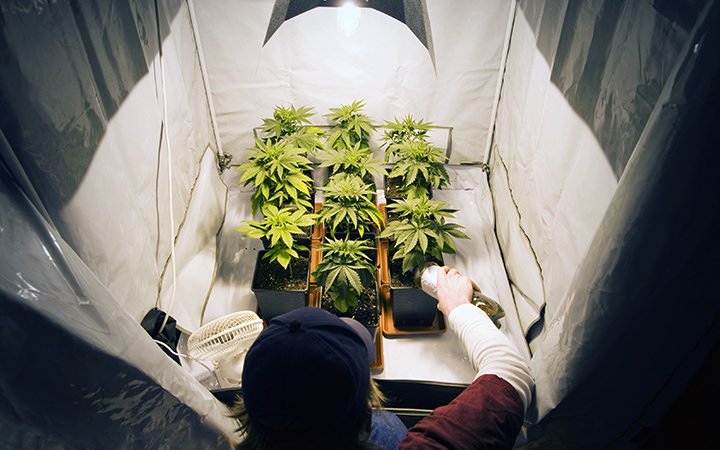
Rubbing alcohol or hydrogen peroxide are perfect for sterilizing garden tools and some growers will even change their shoes before entering the grow room as an extra layer of protection. Prevention measures such as these will go a long way in ensuring your garden remains pest free.
Clones vs. Seeds
Another consideration is whether you are growing from clones or seeds. Clones often come from unknown environments and can be potential carriers of pests. When working with clones, ensure that you get them from a trusted supplier and that they have a pest-free garden. However, growing from seed provides the best chance for avoiding unwanted pests as your garden is the only environment it will have been in.
Grow Medium
When it comes to pests there are different grow mediums that lend themselves to pest prevention better than others.
Hydroponic mediums are perhaps the best for pest prevention, but clay pellets and rockwell are also great options for avoiding pests. Traditional soil tends to be the most common occurance of pest transport, so it is always a good idea to buy quality soil from a reliable source. You will want to avoid any grow medium with non-composted plant material as it could harbour pests or other unwanted components.
Fly Strips
One of the simplest ways to help reduce the occurrence of pests in your indoor cannabis garden is by using fly strips. Hanging fly strips are also a great monitoring technique as, if any pests do exist in the garden, they will be caught on the strip. This will give you a good indication of what may be lurking and allow you to act quickly, before any real damage is done.

Are You Harvest Ready?
CenturionPro Solutions can help ensure you are ready for harvest season! We supply an elite line of bud trimming machines suited to various gardens from the home grower to medium-sized commercial greenhouses to large licensed producers. The use of a trimming machine is beneficial for efficient harvesting and can trim 6lbs (dry product) per hour with our TableTop Pro system up to 50lbs (dry product) per hour for our largest 3.0 triple-barrel medical grade system.