
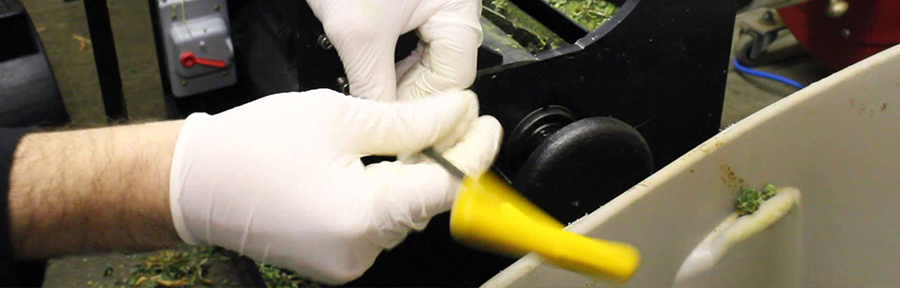
First and foremost, maintaining and cleaning marijuana trimmers is the key for maintaining the life of your machine. Fortunately, our machines require little maintenance, so you only need to do this from time to time.
CenturionPro’s bud trimmers are easy to clean so you can spend more time producing successful results with little effort. For starters, the machines are generally small so there aren’t tons of parts that require cleaning. However, do remember that you can extend the life of your cannabis trimmer by greasing the bearings after every few cleanings. To keep your trimmer healthy, we also recommend cleaning the machine after every three to four hours of use.
However, you’ll want to remember that every strain of marijuana is different. That means that some machines can go longer without cleaning whereas others need cleaning sooner. For example, dry trimming requires less cleaning than wet trimming – so make sure you keep these important details in mind.
Once you start using your trimmer, mark the date in your calendar to track how long you’ve been using it. The brush needs to be replaced annually since the bristles tend to get bushy due to hot water, meaning they aren’t effective anymore.
There are a few steps you can follow to take good care of the Quantanium coating. Firstly, submerge it in a pool of soapy hot water and let it soak. Make sure that you don’t do any pressure washing and always wipe it clean with a soft cloth. If you must use a cleaning agent then stick to one part Dawn dish soap along with one part vinegar in a spray bottle, coating it and then letting it soak. You can also clean other parts of the machine this way.
Because the bed bar blade is made of Toro hardened steel you should never have to sharpen it. However, if necessary, use a sharpening stone and check out our video tutorial to find out how to do this safely.
When cleaning marijuana trimmers, outline your cleaning schedule and don’t forget to include your blower. For more information on how to maintain the life of your CenturionPro trimmer, check out our video tutorials. Lastly, always store your trimmer in a warm environment, such as a car garage, and give your machine a break from time to time since they can run nonstop for several days.