
Well, it seems like cannabis in California, is now beginning to lay down the foundation for labor workers in the cannabis Industry. On March 2, 2016 In Santa Ana, labor officials and the cannabis industry have worked together with the state legislature and the Governor’s office for the last five years to craft public policy to allow safe access to patients and at the same time protect our neighborhoods.
South Coast Safe Access, and the United Food & Commercial Workers Union Local 324 has negotiated the first! And I mean the first labor agreement ever for Cannabis workers in Orange County. The contract provides for union representation, paid holidays, paid sick leave, employer paid health insurance, pension retirement plan, paid vacation, grievance procedure and livable wages.
Medical cannabis has been legal in California for nearly 20 years and cannabis workers believe California can once again move to the front of the pack by protecting workers and consumers in an industry that will certainly grow and become an even bigger part of our state’s economy. Hmmm.
City officials state, “We are pleased to see that elected officials are recognizing the need to professionalize the medical marijuana workforce and to keep the industry in the hands of legitimate operators who have worker safety in mind” The Orange County Labor Federation (OCLF) and UFCW Local 324 welcome these new members to our family which includes pharmacists, pharmacy technicians and pharmacy clerks.
Workers will be paid at least $13.50 an hour and receive employer-paid medical benefits and employer contributions to a retirement pension, said an executive vice president of UFCW Local 324. The state’s current minimum wage is $10 an hour. The new agreement goes into effect in a couple of days.
The labor agreement is also intended to help increase the industry’s credibility, he said the union is also talking with other Orange County dispensaries about similar labor agreements. In the city of Los Angeles, 26 medical marijuana dispensaries have been unionized, according to a director of organizing at UFCW Local 770.
He also states that unionizing the medical cannabis industry also could provide a boost to the union. “Here in California, we’ve maintained our numbers in the labor movement,” “But we haven’t seen large numbers of growth in decades.”
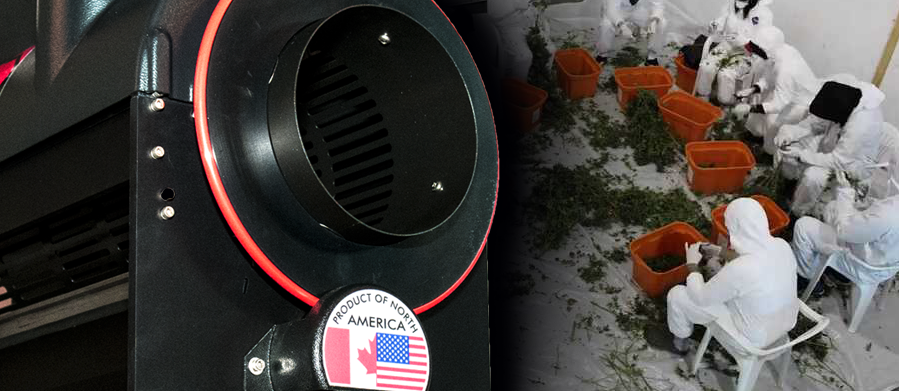
WOW! My question to that, and if I am understanding this historic labor agreement in the making is that it protects all Cannabis workers in the Industry. That Includes Retail Bud Trimmers, Wet/Dry cannabis trimming machine operators, Bud tenders, delivery drivers, etc. and with above the minimum average pay, they can now afford to pay union fees! And lucky for the Unions, they just found some fresh territory to inject life and revive themselves from extinction.
So, Imagine the conversation one day when a cannabis worker is asked, “So what do you do for a living? Well I am a cannabis trimming machine operator, and were unionized! Hoorah!!
Michael Garay ~