
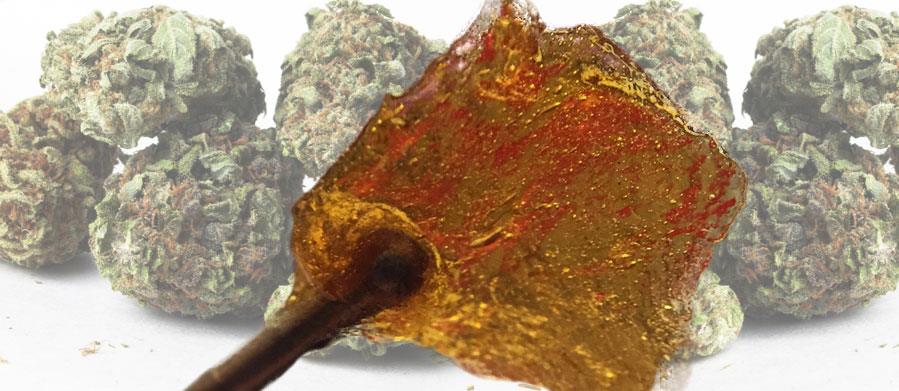
Many new and exciting cannabis products come on the market every day. Rosin seems to be the latest concentrate craze and it seems like many people don’t really know what to think of it yet. It’s a very, very simple process and seems to produce fantastic results when done right. Rosin is the name given to concentrates extracted with heat and compression. What this means for most people is a truly solventless concentrate. While I enjoy bubble as much as the next person that comes along, from a numbers standpoint in production it doesn’t yield well enough to be economical unless you happen to be VERY good at it. The average bag wash if done well will yield anywhere between 8-12% based on weight. Not very impressive when most oil runs can achieve upwards of 20-30%. Rosin presents a way to hit these higher production numbers, without using costly hydrocarbon or CO2 machines. All one really needs is a hair straightener, parchment paper, and bud. Bam! Homemade dabs. However done at home, the results will be nowhere near efficient, but the ease of production is there. Many companies offer special rosin presses and essentially they are all the same thing. A high heat manual or automatic press.
These machines concentrate a very high amount of pressure and heat in a small area that compresses the buds and ‘squeezes’ out the sappy concentrate. Producing material that can be pressed can be a tough choice though. Whole nuggets can be pressed several times and can be done either wet or dry. Trim can also be presses but with larger smaller pieces that could be absorbed by the fresh concentrate, a lot of care has to be taken not to mix the two up, so a screen must be used. With a good screen system, even kief can be pressed out into very productive concentrate runs. Most bud trimmers don’t readily produce much kief to be spoken of and extracting it during the curing process can be costly and inefficient. With newer bud trim machines, such as the CenturionPro, the trim can be separated into products that will better run through a rosin machine. WIth their 2 bag system, the inner 200 micron bag catches all larger trim that can be pressed with mild difficulty. However the material in the outer bag, the finer grade kief, can very easily be immediately pressed for concentrate, making fresh potent concentrate at the same time as harvest, which can help mitigate costs and create a more even cash flow based on weight produced. Oil and Hash have a dark horse in their rear view, and its name is Rosin.
~Connor